Measuring instrument importers in Mexico, the Dominican Republic and Colombia: who buys, from whom and how much
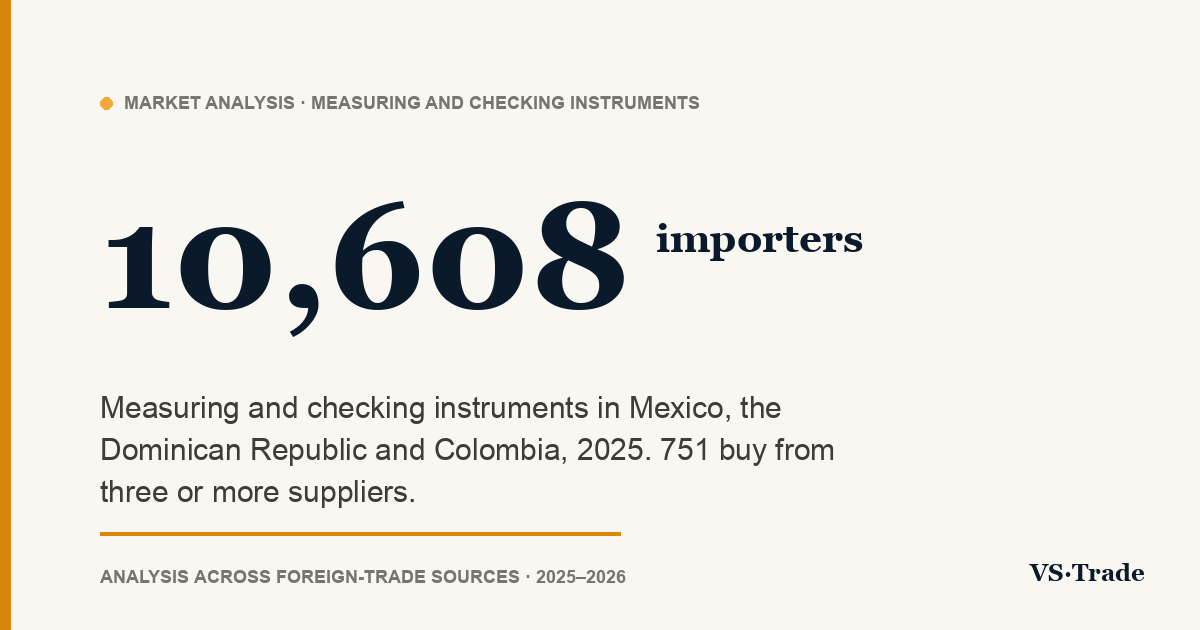
US$ 879.7 M of measuring and checking instruments entered Mexico, the Dominican Republic and Colombia in 2025, through 10,604 importers. 645 of them buy from three or more suppliers with none above 60%: they already work with several suppliers at once.
By VS·Trade · Market analysis
Measuring instrument importers: the 3 markets in figures
According to our analysis, which cross-checks several foreign-trade sources in each country:
| Country | 2025 value | Importers | Named suppliers | Multi-brand importers | Top-10 share | 2026 vs. same months of 2025 |
|---|---|---|---|---|---|---|
| Mexico | US$ 813.4 M | 8,097 | 11,202 | 481 | 16.2% | +7.6% (January–September) |
| Dominican Republic | US$ 8.6 M | 534 | 851 | 37 | 37.9% | +22.7% (January–September) |
| Colombia | US$ 57.7 M | 1,973 | 2,873 | 127 | 20.5% | +30.4% (January–August) |
Mexico is the largest market. The most concentrated is the Dominican Republic: there the ten largest importers account for 37.9% of the value.
Measuring instrument importers in Mexico
US$ 813.4 M of measuring and checking instruments entered Mexico in 2025. It was bought by 8,097 incorporated importers from 11,202 suppliers named on the invoice. 481 of those importers are multi-brand: three or more suppliers, none above 60%. The ten largest account for 16.2% of the value and the largest for 3.9%.
Main origins: United States (23.4%), China (16.4%), Germany (14.2%), Japan (9.8%). In January–September 2026 the value is up 7.6% on the same months of 2025, and 167 new importers appear (US$ 50,000 or more in 2026 and nothing in 2025).
Measuring instrument importers in the Dominican Republic
US$ 8.6 M of measuring and checking instruments entered the Dominican Republic in 2025. It was bought by 534 incorporated importers from 851 suppliers named on the invoice. 37 of those importers are multi-brand: three or more suppliers, none above 60%. The ten largest account for 37.9% of the value and the largest for 6.9%.
Main origins: United States (27.7%), China (20.2%), Germany (7.6%), Spain (5.7%). In January–September 2026 the value is up 22.7% on the same months of 2025, and 5 new importers appear (US$ 50,000 or more in 2026 and nothing in 2025).
Measuring instrument importers in Colombia
US$ 57.7 M of measuring and checking instruments entered Colombia in 2025. It was bought by 1,973 incorporated importers from 2,873 suppliers named on the invoice. 127 of those importers are multi-brand: three or more suppliers, none above 60%. The ten largest account for 20.5% of the value and the largest for 3.8%.
Main origins: United States (25.6%), Germany (19.1%), China (16.1%), Italy (5.5%). In January–August 2026 the value is up 30.4% on the same months of 2025, and 21 new importers appear (US$ 50,000 or more in 2026 and nothing in 2025).
Channel. In this heading, a large share of 2025 value is imported by the manufacturer's own subsidiaries or by single-supplier exclusive importers (9031: 55% of value). The report flags them separately: they are not an open channel for a new supplier.
What a supplier should look at
- Which multi-brand importers buy my product, at a price close to mine, and don't buy from me? That is the list of possible channels in each country.
- Which other suppliers does my importer buy from, and at what price? That tells you how much of its portfolio is yours.
- Who bought in 2025 and has not bought again in 2026?
What the measuring and checking instruments report includes
From this data we build a report per sector: the importers of your product with name and volume, which suppliers they buy from and at what price, who started buying in 2026 and who has not bought again, and where we already know who makes the buying decision. It costs US$ 1,490, one-off, delivered within 5 business days in PDF and Excel. You can order it online; first, see a sample measuring and checking instruments report (PDF); electrical measuring instruments (heading 9030) have their own report.
Frequently asked questions
How many measuring instrument importers are there in Mexico?
In 2025 we identified 8,097 incorporated importers of measuring and checking instruments in Mexico, buying US$ 813.4 M. In the Dominican Republic, 534. In Colombia, 1,973.
Where does Mexico import measuring and checking instruments from?
By 2025 value, the top origins were United States (23.4%), China (16.4%), Germany (14.2%).
How are measuring and checking instruments imports doing in 2026?
Mexico: +7.6% (January–September). Dominican Republic: +22.7% (January–September). Colombia: +30.4% (January–August). Compared with the same months of 2025.
What does the measuring and checking instruments report include and how much does it cost?
The importers with name and volume, their suppliers and prices, who started and stopped buying in 2026, and the buying contacts we have identified. US$ 1,490, one-off, delivered within 5 business days in PDF and Excel.
More analysis in this sector
- Computer importers in Mexico, the Dominican Republic and Colombia: who buys, from whom and how much
- Electrical measuring instrument importers in Mexico, the Dominican Republic and Colombia: who buys, from whom and how much
- Lighting importers in Mexico, the Dominican Republic and Colombia: who buys, from whom and how much
How we measure it
Harmonized System heading 9031. Values are declared invoice values at import, at each shipment's incoterm. In Mexico only definitive imports count. Importers are companies: individuals are neither counted nor published. Multi-brand: three or more suppliers in 2025, the largest at 60% or less, with no declared link to the importer. Changes compare the same months of 2025 and 2026, up to the latest month available in each country. Details in our methodology.
Keep reading
- Bluetooth speaker importers in Mexico, the Dominican Republic and Colombia: who buys, from whom and how much
- Prosthetics importers in Mexico, the Dominican Republic and Colombia: who buys, from whom and how much
- Watch importers in Mexico, the Dominican Republic and Colombia: who buys, from whom and how much